By Raghu Menon | June 11, 2023
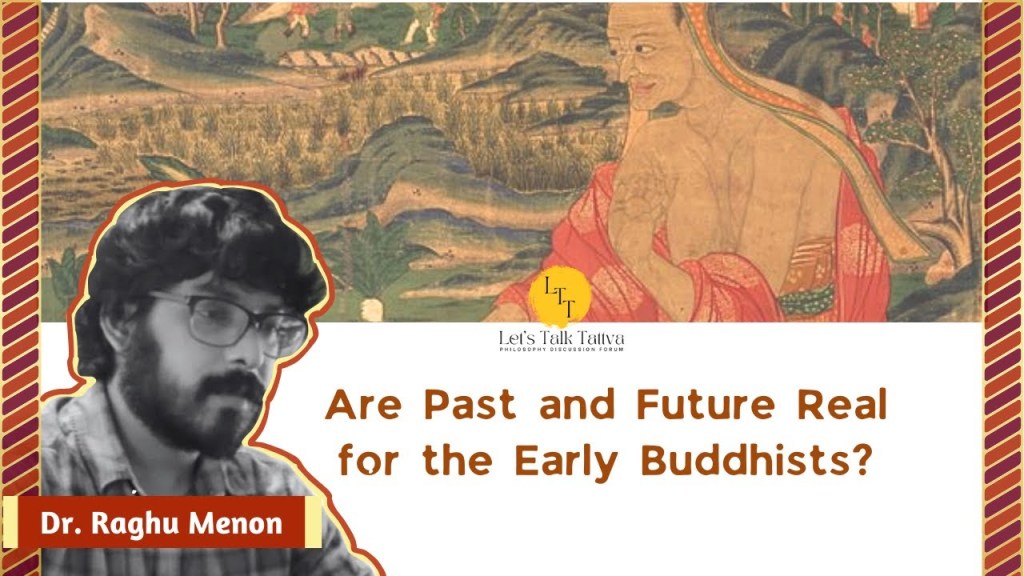
Abstract: Broadly speaking, much of Buddhist philosophy is founded on the argument that human suffering originates from a profound confusion or ignorance concerning the nature of reality. Consequently, the primary objective of philosophical discourse, according to Buddhists, is to dispel such misconceptions and establish a correct understanding of reality. Central to this worldview is the axiomatic principle of impermanence (anitya), which underscores the ontological primacy of change and flux: things arise, exist for a brief duration and disappear. Therefore, it is deemed erroneous to conceive anything, including the self, as enduring or persisting through time, as nothing is impervious to change or decay. Instead, individuated objects of experience are understood as being aggregates or compounds of certain irreducible psychophysical elements and, as such, devoid of any substantial essence. From the Abhidharma period onwards, these elements or factors are referred to as dharmas, which are said to exist for only a fleeting moment (kṣanavāda or the doctrine of momentariness). Although referred to as factors, dharmas are often interpreted as dynamic, elemental events that interact with one another to constitute phenomena (Cox 2004). Nevertheless, interpretations and theories regarding dharmas vary significantly across Abhidharma schools based on their respective doctrinal commitments. The position of the Sarvāstivāda (the theory of ‘sarvam asti’ or ‘everything exists’) school of Abhidharma differs considerably from others: in contrast to other schools that hold the view that dharmas exist only in the present, the Sarvāstivādins contend that they exist in all three ‘times’ – i.e., past, present and future (traikālyavāda). Furthermore, they assert that when these factors traverse time, it is not the essential nature (svabhāva) of the factor that changes, but its mode or position. The emphasis on the svabhāva of dharmas has spurred considerable controversy within Buddhist tradition due to its seemingly incongruous assertion of an immutable essence. This presentation offers an outline of the Buddhist conception of time in relation to the debates and disputes between the Sarvāstivādins and other Buddhist schools.




 Let's Talk Tattva: A Philosophy Discussion Forum
Leave a comment